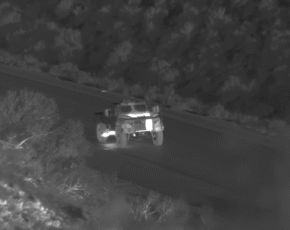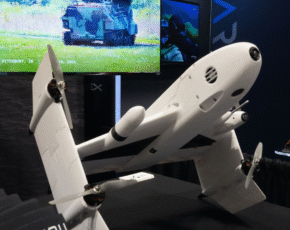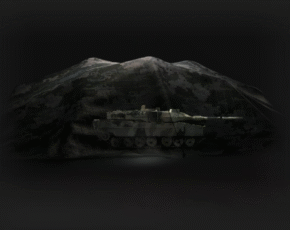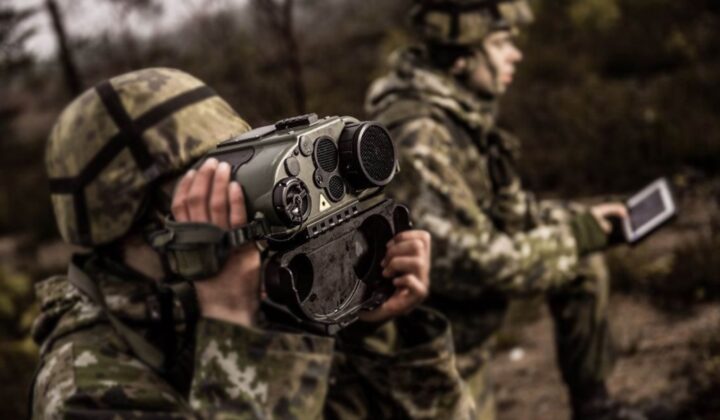
In recent years, the role of thermal imagers and drones in warfare has grown exponentially, leading to a significant expansion of the thermal imaging optics market. Studies show that the global market value of military thermal imaging optics is already measured in billions, with the aerospace and defence industry segment accounting for about 40% of the total market for thermal imaging solutions.
According to estimates, the military thermal imaging optics market is valued at approximately $10.7 billion in 2025, with growth expected to reach approximately $17.6 billion by 2033, while the global market for weapon-mounted and reconnaissance thermal imaging devices will grow to approximately $6.15 billion by 2029.
Enemy reconnaissance is conducted using thermal sensors that detect heat sources in various conditions – in open fields, among buildings or under cover – and are not dependent on visual camouflage. This is why specialized protective solutions have been developed – anti-thermal imaging suits that effectively reduce the thermal visibility of personnel, making military personnel less visible to drones, thermal imagers and night vision devices.
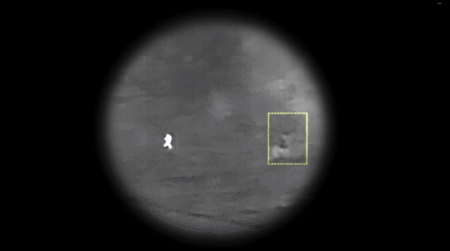
Types of protective suits for military personnel
Individual protective clothing can be broadly divided into several categories:
- Camouflage suits – classic sets that blend in with the natural environment, optimal for daytime operations in forested, steppe, or urban terrain, partially effective against visual detection, especially from long distances. They help the wearer merge with terrain and vegetation but do not provide concealment from thermal imagers or NVDs.
- Anti-thermal imaging ponchos – lightweight solutions for quick cover. Convenient for use during ambushes or active movement on missions. A mobile option for short-term protection, easily stored in a backpack, with a universal size and adjustable fit.
- Anti-thermal imaging suits – full-body protective sets designed to safeguard personnel during movement, mission execution, and direct combat. They provide comprehensive protection against thermal imagers and NVDs, are quick and easy to put on over existing uniforms and gear without restricting mobility, and produce minimal noise when moving, keeping the military personnel less detectable in various environments.
In conditions of intensive drone and thermal imager activity on the front line, an anti-thermal imaging suit is the optimal solution, providing enhanced protection and superior comfort.
How an anti-thermal imaging suit protects personnel
Modern thermal imaging systems can detect a person from a distance of several kilometers, relying solely on body heat. This means that even a well-camouflaged serviceman in a standard uniform can be quickly detected by enemy drones or optical systems.
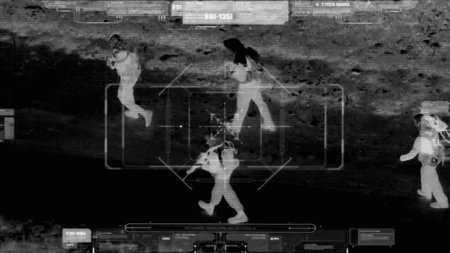
The principle of operation of an anti-thermal imaging suit is to reduce the thermal signature of military personnel by reflecting, scattering, and partially shielding infrared radiation. Since the heat of the human body is easily detected by thermal imagers even in total darkness or through smoke and vegetation, the suit's purpose is to make this heat less noticeable. The anti-thermal imaging suit has both emissive and reflective properties, allowing it to blend the military personnel's IR signature into that of the surrounding environment, reducing the silhouette's contrast for thermal sensors. As a result, the thermal imager sees not a bright human silhouette but a blurred, low-contrast background, significantly complicating the military personnel's detection.
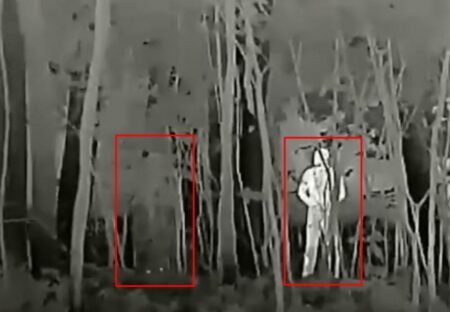
As a result, it:
- reduces the likelihood of detection during movement and when stationary;
- provides additional time to react – personnel can change position or prepare to act;
- increases the effectiveness of reconnaissance, surveillance, defence, or special operations;
- improves personnel survivability, as it complicates the work of enemy drones and thermal-imager operators.
Thermal Signature Suit – a fusion of innovation and practicality for military personnel
The Thermal Signature Suit is designed specifically for service members operating in environments where the enemy actively employs thermal imagers and NVDs.
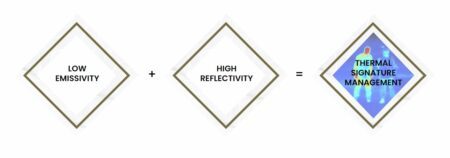
Two key properties are essential for effective management of thermal radiation: the material’s high reflectivity of heat signals and low emissivity of thermal energy. The Thermal Signature Suit offers an optimized balance of these characteristics, significantly reducing the wearer’s thermal signature and providing reliable protection against detection by thermal imaging systems.
The suit provides effective camouflage across the near (NIR), short-wave (SWIR), mid-wave (MWIR), and long-wave (LWIR) infrared bands. The operator remains concealed not only from standard thermal imagers but also from advanced surveillance systems operating across multiple spectral ranges.
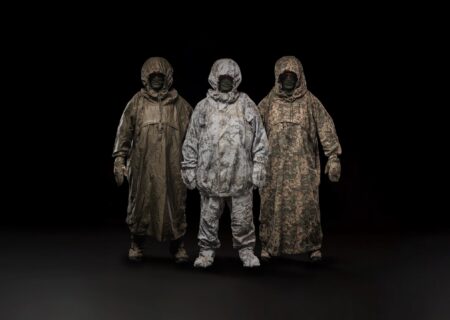
It is also important that the Thermal Signature Suit combines not only advanced camouflage properties but also a range of functional features designed for operational convenience:
- Ultra-lightweight construction. The suit weighs only 570 g, folds easily, and can be quickly attached to personal gear, making it ideal for rapid deployment in any conditions.
- Wear resistance. The suit's materials can withstand up to 20 wash cycles without losing their camouflage performance.
- Low noise level when moving. The suit's material does not create unnecessary noise, which increases the chances of remaining undetected.
- Easy and quick to put on. The suit is designed to be worn over existing uniforms and equipment within seconds, without restricting mobility and while maintaining full freedom of movement.
- One size fits all. The suit's design features an adjustment system that allows it to be adapted to military personnel of different builds and ensures comfort during prolonged use.
- Compatible with all camouflage patterns. Thanks to its specialized print design, the material’s reflective and emissive properties can be tuned for different operational environments – desert, woodland, or snow – enhancing protection based on mission requirements.
- Compatible with additional treatments. Optional application of a water-repellent membrane and flame-retardant coating is available.
By choosing the Thermal Signature Suit, you get a reliable shield against enemy surveillance systems. The anti-thermal suit significantly complicates the work of thermal imagers and night vision devices, reducing thermal contrast and blurring the silhouette. This gives the military personnel a critical advantage – they gain time to manoeuvre: regroup, conduct a quiet evacuation, covertly approach an observation point, set an ambush, or call for support with a reduced risk of detection. Submit an inquiry on the website – our project director will advise and help select the optimal solution for your unit.