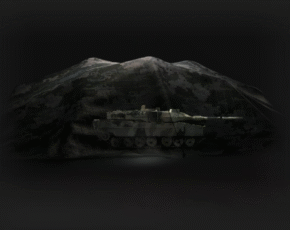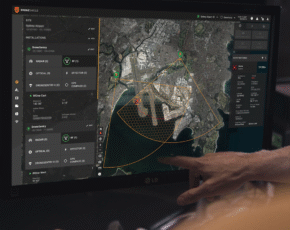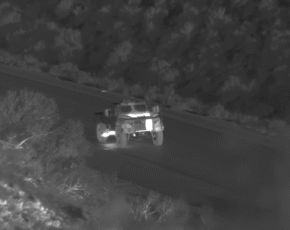
For modern military personnel, the greatest threat is not direct combat, but the possibility of being detected. Drones with thermal imaging cameras operate around the clock, leaving no room for mistakes. In response, the global market for anti-thermal imaging camouflage solutions is growing. In 2024, it was estimated at approximately $1.42 billion with projected growth to $2.83 billion by 2033. This indicates that innovative camouflage technologies are becoming not just optional gear but a critical component of the modern army.
In such conditions, classic camouflage equipment no longer provides necessary protection against thermal imagers and night vision devices. Military personnel need new-generation solutions that not only conceal them in the visible spectrum but also effectively camouflage them in the thermal spectrum. This is precisely why anti-thermal ponchos have been created, which are becoming an essential part of modern equipment.

Why thermal imaging cameras and NVDs are the main threat on the battlefield at range
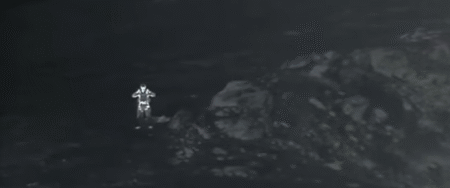
Thermal imaging systems and night vision devices operate in the infrared spectrum and detect the thermal signatures of objects. Any live creature accumulates and emits heat, which manifests itself as a clear silhouette on the screen even in complete darkness or in the presence of thick smoke or fog. Due to the temperature contrast with the background, a soldier in standard uniform remains a clear target for observation. This significantly increases the risks during reconnaissance missions, ambushes and defensive operations.
Drones equipped with thermal imagers effectively detect people by thermal contrast even in limited visibility, and research shows that modern algorithms and models for analysing thermal images are making automatic human recognition in IR images increasingly reliable. The development of this technology has led to a rapid increase in demand for multispectral camouflage solutions, which means that without proper thermal camouflage, the number of personnel at increased risk of detection will remain high.
Modern means of protection against enemy detection
Reliable protection of personnel against enemy detection is based on a combination of technological and tactical measures, such as multispectral camouflage coatings and materials with controllable emissivity, adaptive concealment nets, as well as technical countermeasures – thermal shielding of equipment hot spots and electronic noise masking. Within this layered approach, anti-thermal ponchos play a special role. They are mobile and compatible with existing uniforms, and can be used to control the thermal signature of a combat unit.
Ponchos are multifunctional pieces of equipment, and their key advantage is that they can be used to quickly cover military personnel or equipment. Among the military types of equipment today, several types of camouflage ponchos can be distinguished:
- Classic camouflage ponchos – used as a rain gear and a visual concealment element, but it does not provide protection from thermal imagers and night vision devices.
- Anti-thermal ponchos (e.g., Stealth) – specially designed for drone warfare. It masks thermal radiation, providing full protection against thermal imagers and night vision devices.
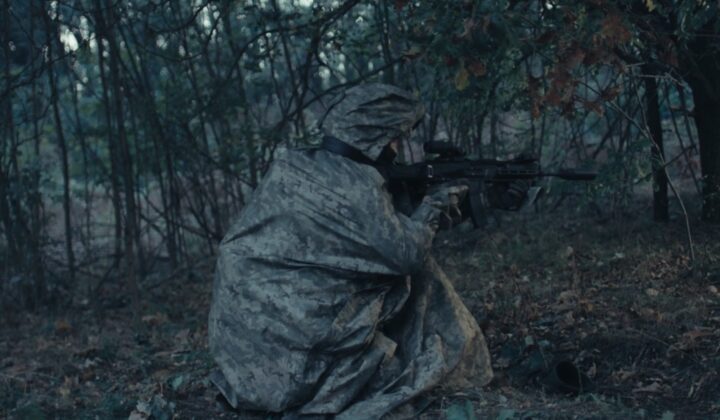
The development of adaptive camouflage systems that can change their properties depending on the environment opens up new opportunities for reducing thermal visibility. Modern anti-thermal imaging ponchos have special coatings that reduce thermal radiation and make the silhouette less contrasting for surveillance devices. The anti-thermal poncho is easy to put on and take off, enabling rapid response to changes in the tactical situation. Its main function is to blend the thermal signature of personnel with the ambient temperature of the terrain and reduce the risk of detection by thermal imagers and night vision devices.
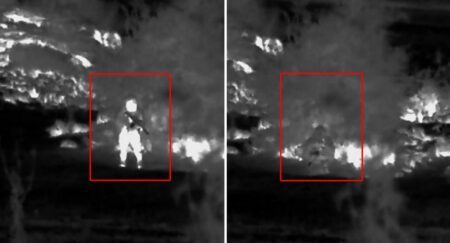
Ponchos of this type are made from specialized materials that:
- reflect infrared radiation, providing protection against thermal imagers and night vision devices;
- disperse thermal energy, preventing the formation of a distinct silhouette;
- reduce the thermal-signature contrast of personnel;
- combine IR protection with conventional visual camouflage.
The use of such a poncho allows military personnel to remain inconspicuous to most reconnaissance systems, significantly reducing the risk of detection and increasing the likelihood of mission success.
Thermal Signature Poncho – a new level of concealment against thermal imagers and NVDs
Among the wide variety of available solutions, the Thermal Signature Poncho stands out as an ultra-light, anti-thermal poncho designed for individual cover in modern warfare. Its key advantages are mobility and ease of use, while its primary purpose is to provide effective protection against thermal imagers and night-vision devices.

The Stealth material is made of nylon with silver crystals. Silver is characterised by extremely low emissivity and high reflectivity in the infrared range, making it ideal for multispectral concealment. The design and printing technology enable the reflective and emissive properties of the material to be adjusted to specific terrain conditions – sand, woodland, or snow – ensuring maximum adaptation of the thermal signature to the background of the surrounding environment.
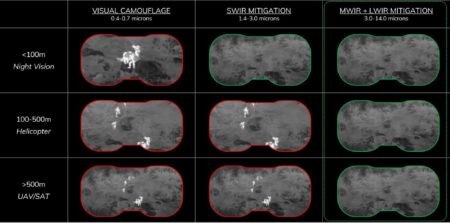
Key advantages of the Thermal Signature Poncho:
- The material provides protection from thermal imaging and night vision devices in several infrared ranges (NIR, SWIR, MWIR, LWIR) and diffuses the thermal contour, making personnel as invisible as possible to drones.
- The poncho is easy and quick to put on over any uniform and equipment, does not restrict movement, is hygienic and breathable.
- The Thermal Signature Poncho is lightweight (880 g), folds compactly and can be quickly secured to equipment.
- The material is low noise, allowing the wearer to remain unnoticed even in close proximity to the enemy.
- The poncho is compatible with all camouflage patterns depending on the mission and operational environment.
- The manufacturing process supports optional treatments, including the application of a water-repellent membrane and flame-resistant (FR) coating.
- The material is wear-resistant, withstanding up to 20 wash cycles while retaining its shape and performance characteristics.
The Thermal Signature Poncho is a comprehensive concealment solution tailored to modern combat conditions. Its key advantages are low weight, rapid deployment and multispectral effectiveness, which reduce the risk of detection by the enemy, provide additional time for maneuver or evacuation, and enhance survivability in the field. Employing this capability broadens the options for conducting operational tasks, making it an investment in combat resilience and personnel safety.