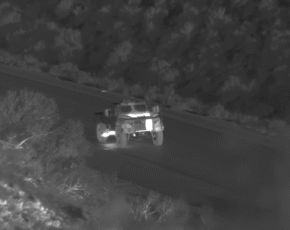
Starlink has become one of the key tools for modern military units – for communication, command, data exchange, and coordination. But along with its advantages comes a critical vulnerability: the terminal emits heat, which makes it visible to enemy thermal-imaging systems and night-vision devices.

Why Starlink is visible to thermal imaging cameras
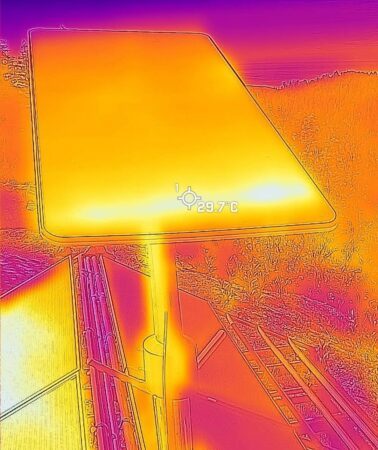
The phased-array Starlink antenna generates noticeable heat during operation due to its active beam-forming elements, RF path, and internal electronic modules. This causes stable local overheating in the central part of the panel, which is clearly visible even to mid-range thermal imagers. These hot zones become especially contrasting in cold weather or against a background of unevenly cooled terrain.
An additional factor is the power supply unit, which produces its own thermal signature. In field conditions it often heats up even more than the antenna itself – due to limited airflow, protective housings, and placement in pits or depressions where warm air accumulates. This makes detection even easier, as the enemy sees several hot spots connected by cables.
The router operating together with Starlink also adds thermal anomalies to the overall picture. It heats up significantly during high-volume data transmission and can reach temperatures that a thermal imager easily detects at medium distances. As a result, the entire Starlink setup creates a complex multi-point IR signature that is easy to identify.
The geometry of Starlink also plays an important role. The antenna has a distinct flat shape and a uniform heating pattern that differs from any natural object. Even if partially covered, a thermal imager detects the anomaly due to its temperature contrast and characteristic hot spot.
Modern enemy thermal imagers feature highly sensitive sensors capable of detecting minimal temperature deviations on the ground. Against a natural environment with chaotic and uneven thermal patterns, artificial objects with stable heating stand out immediately. This is what allows enemy operators to identify equipment even when it is partially concealed.
Starlink concealment: effective and safe approaches
Camouflaging Starlink in combat conditions is based on a combination of engineering solutions and tactical discipline. Since the terminal produces a stable thermal signature, the unit’s main task is to conceal the heat, reduce contrast as much as possible, and disrupt the recognisable shape. This is achieved through the use of materials with controlled thermal conductivity, proper placement, and minimising operating time.
- The first key principle is creating a barrier between the antenna and the external environment. This is done using composite materials with metallised coating, carbon fibres, and specialised anti-thermal-imaging fabrics that smooth out the thermal trace without fully blocking infrared radiation. It is essential to maintain an air gap between the material and the antenna to prevent overheating and maintain a stable signal. Heat must dissipate evenly, and the material must not interfere with the antenna’s operation.
- Another important heat-reduction method is distancing individual heating components from one another within the position. The power supply unit, router, and cables create additional thermal anomalies, so isolating them is crucial. Placing these components in shade, in separate recesses, or behind natural obstacles makes the overall thermal picture more chaotic and less noticeable to the enemy.
- Environmental factors must also be taken into account. Starlink is least visible when its thermal signal blends into the background – for example, under tree canopies, near stone structures, or close to thermal noise sources such as generators or transformers. Combining natural and artificial heat sources creates an uneven background that makes the thermal hotspot harder to read.
- Another principle is reducing the terminal’s active working time. The less it runs, the less it heats up and the weaker its thermal signature becomes. Using Starlink in short communication sessions significantly reduces the chance that the enemy will detect its thermal trace during a UAV flyover.
- Equally important is masking the cable network. Cables produce a weak but stable thermal signal and should be routed through terrain depressions or under natural landscape elements to decrease their visibility in the IR spectrum. This helps prevent the enemy from identifying a linear heat signature leading directly to the terminal.
All these methods work best when applied together. Thermal camouflage is not a single action but a system of measures involving materials, construction, placement tactics, and regulated usage. Units that apply these principles with discipline significantly reduce the likelihood of Starlink being detected by thermal imagers and increase their safety at the position.
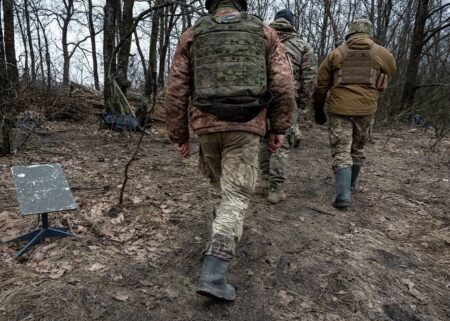
Actions exposing Starlink and increasing the risk of damage
One of the most common mistakes is completely covering the Starlink terminal with dense materials that do not allow airflow. Airtight enclosure causes the antenna and electronics to overheat, increasing the thermal signature and potentially leading to equipment failure. Such covering works like a thermos, trapping heat and making the device even more visible.
You must not use metal boxes or tight foil-lined containers to conceal the terminal. Metal blocks the signal and disrupts satellite communication, causing unstable or total loss of connection. In addition, metal surfaces can concentrate heat, creating distinctive hot spots that a thermal imager detects instantly.
Overly thin foil or reflective materials – especially without an air gap – often produce the opposite effect. They reflect heat back onto the antenna, intensifying local heating and creating a bright thermal contrast.
Another risk comes from ignoring the additional components of the system – the power supply, router, and cables. If they remain exposed or placed close to the antenna, the enemy can easily identify a cluster of heat sources forming a recognizable pattern.
Thermal Signature Equipment Shelter as a solution for concealing Starlink
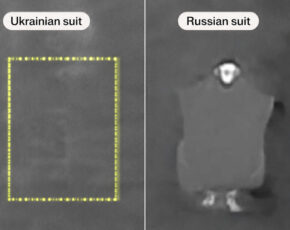
Shelters developed using Stealth camouflage technology are highly effective in disrupting thermal imaging and multispectral surveillance and protecting Starlink. The shelter significantly reduces the intensity of the heat signature and makes it less recognisable from the altitude of the UAV.
Stealth technology is based on the use of a specialised material – nylon with silver crystals. Thanks to the unique physical properties of this metal, in particular its lowest thermal radiation coefficient and highest ability to reflect the infrared spectrum, the solution provides an exceptional level of thermal protection. The material reduces thermal contrast and blurs the silhouette of the object in the NIR, SWIR, MWIR and LWIR ranges. Thanks to this, Stealth camouflages both objects that generate their own heat (e.g. Starlink or generators) and equipment that heats up from the sun or the environment.
An important advantage of Stealth is its ability to blur the silhouette of an object. For Starlink, this means that even if the heat signature is partially preserved, its shape becomes uneven and non-standard. This makes it impossible for reconnaissance UAVs, which usually look for familiar contours – a flat panel of regular shape – to recognise it automatically.
The nylon base with silver remains lightweight, breathable and silent, which is critical for covert deployment operations. At the same time, the material is compatible with various camouflage patterns and protective coatings, making the technology versatile for personnel shelters, equipment and stationary communication systems.
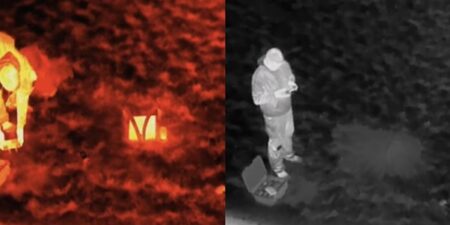
The Thermal Signature Equipment Shelter is one of the most versatile and secure ways to camouflage Starlink and equipment. It simultaneously reduces thermal contrast, disrupts geometry, provides ventilation, and conceals associated components. For units operating on the front line or performing tasks under constant threat of aerial reconnaissance, such solutions can significantly reduce the risk of detection.