Camouflage no longer means reducing visibility. In the 21st century, it aims to control what the enemy sees, measures and interprets. Camouflage, thermal signatures, false targets, simulated activity and information influences have merged into a single system of perception warfare. Different armies have approached this task with different logics – from NATO's doctrinal systematicity to China's adaptive solutions – with individual models of how to wage modern warfare beyond the limits of fire contact.
Camouflage in the USA: the CCD system
In the US Armed Forces, camouflage is considered a full-fledged element of combat. It is planned, controlled and evaluated in the same way as firepower, manoeuvres or communications. The doctrine uses the concept of CCD – Camouflage, Concealment, Decoys. Camouflage is not limited to a single measure or object: it must become part of every element of a unit's operational activities (from individual servicemen to battalion level). The basic principles of camouflage in the United States are:
- Concealment is aimed at minimising visibility to optical and thermal reconnaissance, so camouflage involves blurring silhouettes, selecting materials and coatings for a specific terrain, and the correct use of camouflage nets and natural elements.
- Symmetry, straight lines, and clear contours are considered signs of artificiality that are easy to detect.
- The main unmasking factor is movement. Any movements are planned in bursts, with pauses, without laying roads to positions that immediately reveal their location.
- Models and imitation play a special role. The task is not only to hide real objects, but also to force the enemy to waste resources on false targets, creating a false picture of the battlefield.
- American military personnel are trained to see through the eyes of the enemy. Positions, equipment, routes and cover are assessed from the perspective of how they are seen by operators of UAVs, thermal imaging cameras and satellite systems.
According to the American approach, camouflage is the responsibility of every soldier, not just a few specialists. Positions are constantly checked, mistakes are corrected, and disregard for camouflage requirements is seen as a direct risk of loss.
Canada's systematic approach: CADPAT
Canada was one of the first countries in the world to approach camouflage not as an artistic design, but as an engineering solution. In the early 1990s, the Canadian Armed Forces introduced CADPAT (Canadian Disruptive Pattern), a digital camouflage system based on computer analysis of how objects are perceived by humans and optical sensors.
Unlike classic spotted camouflage, CADPAT uses a pixel structure that works on several scales simultaneously. At close range, small elements break up the contours of the body and equipment, and at a distance, they merge into general spots that mimic the background of the terrain.
An important feature of the Canadian approach is the strict binding of camouflage to the environment. CADPAT exists in several versions – forest, desert, winter – and each is optimised for a specific colour spectrum, brightness and texture of the natural background.
The Canadian Army also uses multispectral camouflage systems (e.g., ULCAS – Ultra-Lightweight Camouflage Screen), which reduce the possibility of detection of equipment and objects by the enemy in the visible and thermal spectra. Fabrics and paints are selected to reduce the contrast between personnel and the environment not only in visible light, but also when observed through night vision devices and thermal imagers.
In Canadian doctrine, camouflage is seen as a combination of material, form and behaviour. Therefore, CADPAT is only part of a broader training system that instructs military personnel to blend in with the terrain not only externally, but also tactically.
The British approach: historical experience and adaptation
In British military tradition, camouflage has always been seen not as an auxiliary element, but as a separate form of combat action. During World War II, the Camouflage Directorate was created within the British Armed Forces as a specialised body responsible for planning, coordinating and controlling all camouflage activities. Its task was to change how the enemy perceived the space, forces and intentions of British troops.
The British were the first to systematically involve professional artists, set designers, architects and engineers in military camouflage. They worked together with military headquarters, creating not only camouflage coverings, but entire illusions – fake airfields, mock tank formations, artificial cities that looked more convincing than real objects from the air. The logic was simple: if the enemy sees a plausible picture, they act accordingly, even if it is completely fake.
One of the most famous examples of this approach was Operation Bertram in North Africa. British troops camouflaged the actual concentration of tanks and fuel depots while creating fake positions in a completely different area. This forced the German command to misjudge the direction of the main attack, which was one of the factors in the Allies' success.
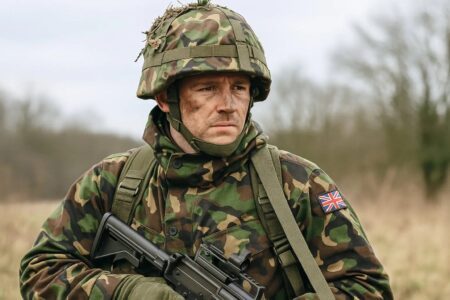
The British Armed Forces are involved in the development and implementation of multispectral camouflage technologies, including adaptive materials and Signature Management solutions that reduce detection in the visible and thermal ranges for personnel, equipment and objects. In addition, such systems are locally manufactured or adapted in the UK for the needs of the army and allies.
Russian doctrine of concealment
In Russian-Soviet military tradition, camouflage is seen as a complex system of deception that permeates all levels of warfare, from the actions of individual units to strategic planning. Its purpose is to give the enemy a false impression of the real situation, causing them to misjudge forces, intentions and directions of attack.
Physical camouflage of positions, equipment and movements is combined with demonstrative actions, imitation of preparations for an offensive, creation of false groupings and even information leaks. The goal is to force the enemy to expend resources and attention on secondary or non-existent threats, while real actions remain hidden.
Russia also uses its own signature management solutions, in particular the Nakidka system, which reduces the thermal and radar signatures of armoured vehicles.
Soviet and modern Russian military theory emphasises that camouflage must be planned in advance and be part of the overall operation, rather than an add-on. It is synchronised with manoeuvres, strikes, force redeployments and even political signals.
Camouflage in China: adaptation, evolution and modern developments
In the People's Liberation Army of China (PLA), camouflage has also evolved in response to changing tactical, climatic and technical requirements, but this evolution has its own characteristics, distinct from Western or Russian practices. Historically, the Chinese approach has combined the adaptation of external ideas to their own operational conditions with gradual systematisation within a single unified camouflage platform.
In the 1980s, the PLA began to introduce its own camouflage patterns, experimenting with forest patterns that visually resembled American woodland types. Based on these, a pattern called Type 87 Woodland was adopted in 1987, which for many years was the standard camouflage pattern for the main branches of the Chinese army. This pattern was developed taking into account local conditions and technologies of the time and was widely used until the mid-2000s.
In 2007, the Chinese military leadership introduced a new generation of camouflage – Type 07, based on digital patterns and available in several variants adapted to different natural environments. The Type 07 system included a universal pattern for temperate and semi-urban areas, a desert variant for arid and desert regions, a forest pattern for dense vegetation, a marine pattern for naval forces, and an urban pattern for built-up areas. This approach allowed the PLA to ensure a certain degree of flexibility in camouflaging personnel according to the terrain of operations.
In addition, Chinese military and industrial structures continued to modernise and locally adapt camouflage patterns, particularly in special conditions (for example, new mountain variants for units in the high-altitude regions of Tibet with finer and softer colour transitions).
In 2021, the Chinese military command officially expanded its camouflage pattern system by introducing the new Xingkong or ‘Starry Sky’ system, which was designed to provide better concealment in a wide range of environments. It includes several options for forest, desert, urban and other areas, and aims to improve camouflage effectiveness at various distances and spectral ranges, including visual and digital components.

Camouflage in European armies: national solutions and approaches
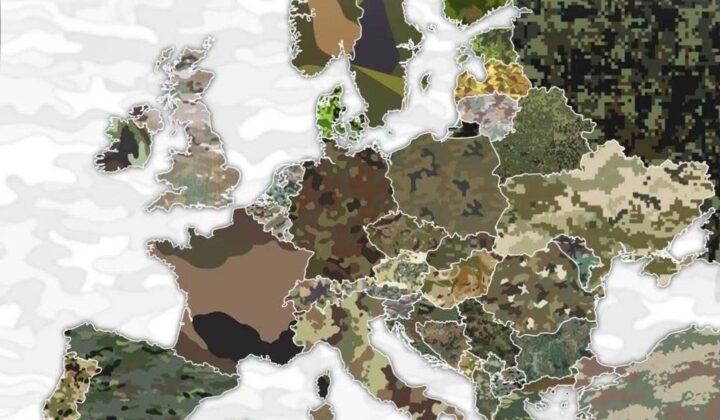
European armed forces develop their own national patterns and standards, tailored to specific terrains and modes of use.
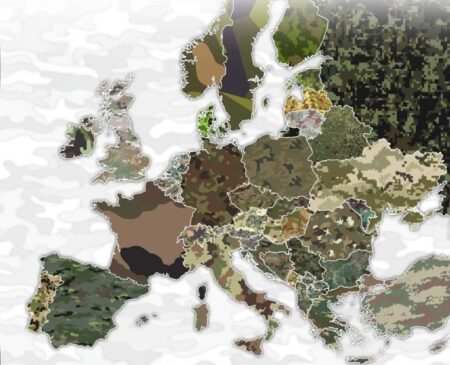
In France, the standard camouflage pattern is Camouflage Central-Europe (CCE) – a traditional forest pattern with dark green, light green, brown and black spots, developed for Central European conditions and adopted in the 1990s. This pattern is successfully used for camouflage in typical European forests and mixed landscapes and has long been the basis of the French army's field uniform. France has also signed a contract for the supply of multispectral camouflage nets from Saab, which provide concealment in the visible, infrared and radar spectrums to protect equipment and positions.
In Germany, the Bundeswehr uses the well-known Flecktarn, which has a five-colour spotted pattern adapted for eastern forest and forest-steppe areas. A new universal pattern, Multitarn, is currently being phased in. It was developed for a wider range of terrains and is planned to be fully replaced by the end of the 2020s. It provides better concealment in various natural environments and improved performance against night vision devices and infrared sensors.
Poland uses wz. 93 Pantera, a four-colour camouflage pattern that became standard for the Polish Army back in 1993. This high-contrast pattern, with shapes that mimic natural vegetation, is effective in typical European conditions and also has a desert variation for operations outside the continent. Poland also officially uses Berberys-R multispectral camouflage, developed by Miranda Military. This system reduces visibility in the visible spectrum, infrared and radar sensors, reducing the likelihood of detection of both infantry units and armoured vehicles.
The Italian Armed Forces use the Vegetato pattern, whose design includes brown, olive, and green spots on a base background. This pattern takes into account the conditions of southern European landscapes with a combination of open terrain and Mediterranean vegetation. In addition, the Italian company ProApto has obtained an international patent for multispectral camouflage technologies that include protection against optical, near and mid-infrared detection, partially reducing the thermal signature. This camouflage is used to develop camouflage systems for personnel and equipment.
Countries in northern Europe also have their own national solutions. Finland, for example, uses the M05 series of digital camouflage patterns, which include options for forest, winter and desert conditions, adapted to the specific climate of the country. Estonia uses ESTDCU, a digital pattern that matches the wooded and mixed landscapes of the region. The Dutch Netherlands Fractal Pattern (NFP) was created as a universal pattern with fractal shapes designed to improve camouflage in various conditions and is actively used as part of the modernisation of field uniforms.
Multispectral camouflage as the key to preserving units
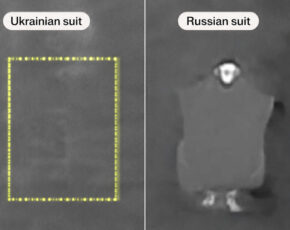
Modern camouflage has long ceased to be a matter of merely blending in with the surroundings. It has become a multi-spectral system for protecting personnel and equipment, working against optical, thermal and digital reconnaissance. All approaches converge on one thing: it is not the external appearance that is decisive, but the actual signature of the soldier, equipment and position in all observation spectra. It is in this context that the practical value of Stealth technology emerges. It works not only with colour or shape, but with how an object appears to thermal imagers and night vision devices:
- Individual protection – the Thermal Signature Poncho and Thermal Signature Suit – allows military personnel to reduce their thermal signature while moving, observing or lying in wait. This directly increases the safety of infantry, snipers, scouts and UAV operators.
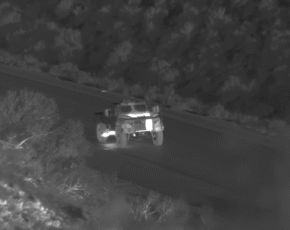
- Static protection – the Thermal Signature Equipment Shelter – solves another critical task: reducing the signature of armour, artillery and logistics assets in concentration areas and firing positions, where the enemy is looking for thermal and geometric anomalies.
The main conclusion for modern military personnel is simple: in a war involving drones, thermal imaging devices and satellites, those who control their visibility across all spectrums will survive. Stealth technology is a tool for combat resilience that transforms camouflage from a formality into a real tactical advantage.