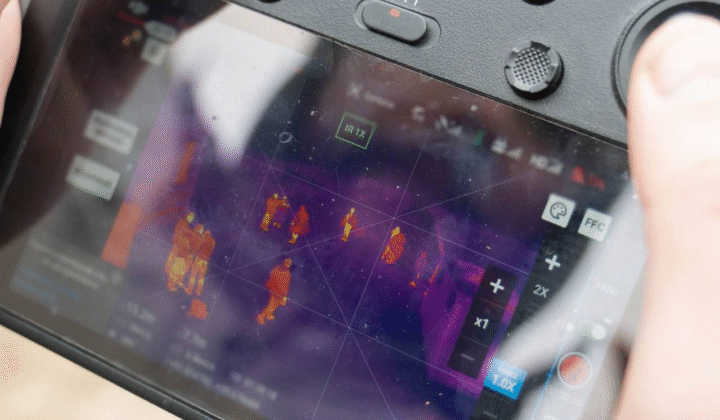
In modern warfare, it is not people, machines, or even artillery that dominate – drones play the leading role. Most modern combat engagements take place in the air – via quadcopters, FPV drones, and unmanned surveillance systems. They detect targets, correct artillery fire, drop ammunition, or act as a strike force themselves. Highly accurate, mobile, and equipped with thermal imaging cameras, they have radically changed the course of combat operations.
In the past, victory belonged to those with better positions and equipment; today, it belongs to those a drone fails to detect.
Thermal imaging invisibility has become particularly important – the ability to hide from the thermal imaging surveillance equipment that most UAVs are equipped with. They detect infrared radiation from humans or equipment and can spot even minor heat sources at long distances – by day or night, in fog or smoke. For this reason, protection against thermal imaging is no longer an option but a basic necessity for survival.
Losses among UAV operators – problem No. 1
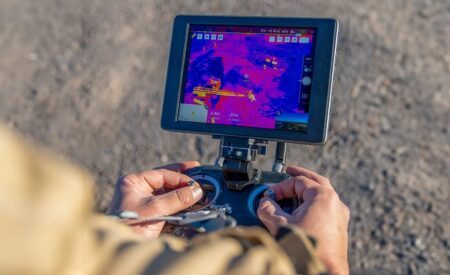
Reconnaissance and strike UAVs equipped with thermal imaging cameras are actively used to locate personnel and positions, which significantly increases the risk of their detection. According to media reports citing commanders and The New York Times, drone units account for approximately 70% of losses on the front lines, and in some cases this figure reaches 80%. The current operational situation indicates the critical vulnerability of Ukrainian UAV crews to detection by thermal reconnaissance systems.
The enemy deliberately identifies and destroys UAV operators as priority targets, understanding their role as command-and-control nodes and providers of tactical advantage on the battlefield. Therefore, an operator working without proper thermal camouflage is at high risk of being hit by high-precision artillery fire, FPV drones, strike drones carrying munitions, or other precision weapons.
Moreover, any personnel performing combat tasks without specialized protection against IR surveillance can be easily picked up in the sights of reconnaissance or strike UAVs.
In these conditions, effective camouflage of a person's thermal signature in the infrared spectrum becomes a critical element of a unit's survivability. That is why the tactics of creating obstacles and selecting the right concealment strategy against thermal imagers are no longer optional measures but mandatory components of a soldier's combat kit to protect against detection.
What to know about the operating principle of a thermal imager
Thermal imaging reconnaissance has become a key tool in modern warfare. Unlike optical systems, a thermal imager is independent of illumination – it detects infrared radiation, i.e., the heat emitted by the human body, engines, electronics, etc.
Conventional methods of concealment – camouflage, foliage, or nets – are only effective in the visible spectrum. They do not reduce a person's visibility in the infrared band of a thermal imager. Ordinary fabric or vegetation are not a reliable way to hide from a thermal imager, as they do not block thermal radiation – it passes through them or is retained and is still detected by the thermal imager.
At night, when visibility is limited, thermal imaging optics work most effectively. In particular, in freezing conditions, a person becomes a bright thermal outline, clearly visible on the screen of a drone or a scout's sight, leaving no chance of remaining unnoticed without specialized protective equipment.
Obstacles for thermal imaging cameras

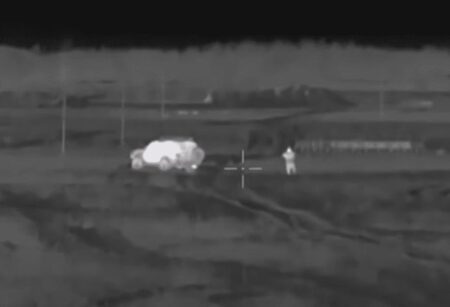
A thermal imager is not “all-seeing.” Its capabilities are high, especially in darkness, but they are not absolute; you can hide from a thermal imager if you clearly understand how it works. The way thermal imaging optics perceive obstacles determines how you can protect yourself against a thermal imager in practice – it enables you to construct shelters, plan routes, and survive. So, how do you hide from a thermal imager?
- A thermal imager cannot see through dense materials
Thermal imagers and night vision devices detect the surface temperature of an object rather than looking inside it. If a material between you and the sensor does not heat up from body heat or sunlight and therefore emits no thermal radiation, it will block detection – the thermal imager will not see you. For example, a multi-layer camouflage net with special screening, a thick layer of earth, rocks, concrete, or clay are some of the options for hiding from a thermal imager.
- Thermal imagers cannot see through glass
Many people wonder if it is possible to fool a thermal imager with glass or other barriers, but this does not always work and depends on the conditions. Although it may seem paradoxical for a civilian user, glass is opaque in the IR range. This means that thermal imagers cannot see a person inside a room through a window (but the device can detect heat on the surface of the glass surface itself). The lenses of drone cameras or thermal imagers are not made of ordinary glass – they are made of special materials (germanium, zinc selenide, calcium fluoride) that are opaque to visible light but transmissive to certain IR wavelengths.
- Natural conditions that help you mask from a thermal imager
If the operation is conducted in thick fog or dense smoke, especially when using smoke containing aluminum particles or special additives (IR-blocking agents), the device will perform worse. This is one example of how to camouflage yourself from a thermal imager. The same applies to thermal inversion, when the ground temperature is higher than the air temperature (at dawn or dusk).
- A thermal imager will not respond to objects whose temperature is equal to the background temperature
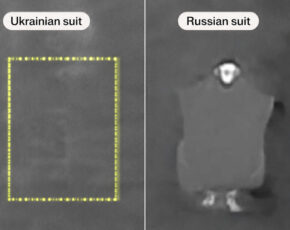
This is the most important point. If you manage to reduce the temperature of the outer surface of your equipment to the ambient temperature or create a barrier that mimics the background, the thermal imager will not see you. This is the principle behind our Stealth technology equipment.
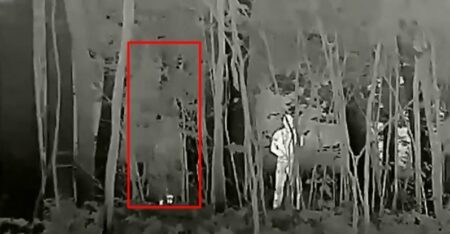
Camouflage measures used on the front line
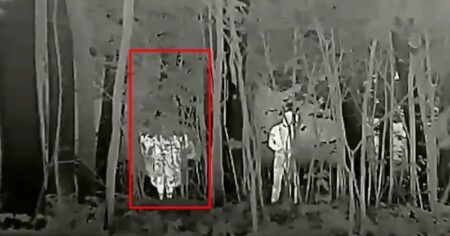
Combat experience in Ukraine, particularly in areas with intensive UAV employment clearly demonstrates that effective IR camouflage is a decisive factor in preserving personnel, and only specialized thermal camouflage equipment provides real protection against detection by thermal imaging devices. Everything else is a compromise that can cost lives.
What really works:
- Compact individual solutions that are easy to use on the march or when changing positions and do not take up much space during transport. Deployment time is a matter of seconds, which is critical when facing a sudden threat from the air.
- Local shelters with ventilation that allow personnel to remain in position for extended periods without overheating – relevant for long-term observation or UAV control.
What protection to choose for complete camouflage from thermal imagers?
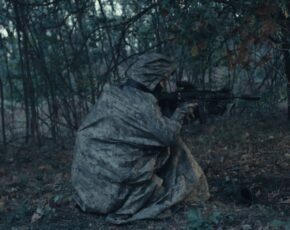
Thermal Signature Poncho for rapid concealment
Mobile groups that frequently change positions require lightweight, quick-deployment counter-thermal solutions. For example, with the Thermal Signature Suit you can urgently cover personnel during rest, a halt, or while carrying out a mission. It does not restrict movement, is compact and easy to use, as it can be put on over equipment in seconds, and its camouflage mimics the surrounding environment.
The Thermal Signature Poncho individual camouflage is designed to blend the thermal signature of personnel with the temperature background of the terrain, reducing contrast in thermal imaging. It minimizes visibility in the NIR, SWIR, MWIR, and LWIR ranges, i.e., in the near, short-wave, mid-wave, and long-wave infrared spectrum.
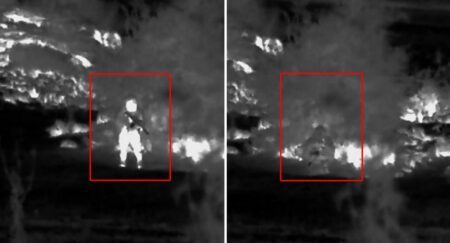
Thermal Signature Suit that thermal imagers don’t see
For positional defense, the optimal choice is a full Thermal Signature Suit, which minimizes thermal signature even during prolonged wear. It is a complete protection system that allows personnel to remain undetected in a multispectral environment for extended periods without losing mobility or effectiveness.
In real-world conditions, Thermal Signature Suits help maintain concealment during observation, artillery adjustment, or drone flights, as well as when moving at night, reducing the likelihood of FPV drone attacks. The suit features an anatomical cut and minimal weight (570 g), does not restrict movement during maneuvering or when operating on position, and is easily worn as an outer layer over body armor, load-bearing systems, and other equipment.
Multispectral protection of equipment against thermal imaging and night vision devices using Stealth technology
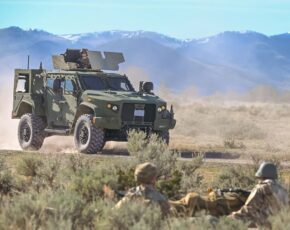
On the modern battlefield, equipment is the primary target. Enemy drones with thermal imaging cameras, strike drones, and reconnaissance UAVs actively hunt for critical infrastructure: armored vehicles, command posts, generators, and mobile command positions. Without protection, positions can be quickly identified and struck, and in such cases, the consequences will be very difficult to mitigate. Therefore, shelters must be as well camouflaged as possible to make them difficult to detect.
Stealth technology shelters are designed to provide the fastest possible multispectral camouflage for objects of any size, from buggies to tanks or command posts. The cover provides comprehensive camouflage in the visible spectrum, as well as in the NIR, SWIR, MWIR, and LWIR ranges. Thanks to its modular design and low weight, it can be deployed within minutes, allowing equipment and machinery to be quickly concealed, and the material can withstand repeated deployment in field conditions.
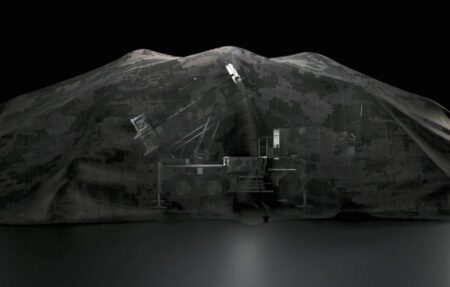
It is also important to understand that the type of task determines the approach to camouflage. For example, reconnaissance requires a mobile means of protection against infrared radiation that is easy to deploy and remove. A UAV operator must operate from a position that does not accumulate heat, while a sniper must endure many hours in passive mode without overheating the outer layer.
There is no universal solution for hiding from a thermal imager, but there are recommendations that work consistently and are important to follow: minimizing thermal contrast, providing ventilation, and most importantly, using proven, field-tested products, such as those with Stealth technology.