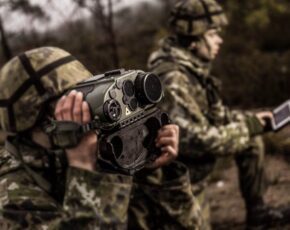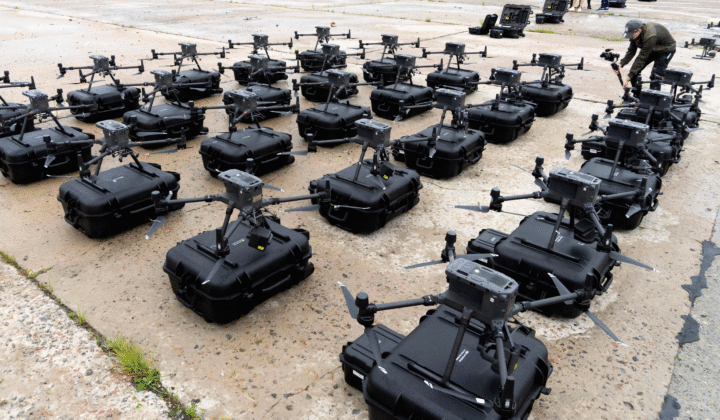
Just a few years ago, most military UAVs operated according to a relatively simple model: operator – camera – video transmission – strike or fire correction. Today, the situation has changed dramatically. A modern UAV is a multisensor reconnaissance system equipped with artificial intelligence components, automatic target tracking capabilities, and integration into a unified digital battlefield network.
For servicemembers, this means one thing: traditional methods of camouflage and movement are increasingly becoming ineffective. If it was once sufficient to conceal oneself from optical observation, today UAVs search for targets simultaneously across the thermal spectrum, radio-frequency emissions, movement signatures, acoustic traces, and even behavioral patterns.
The transition to a multisensor system
The most significant change in recent years has been the transition from single-sensor detection to integrated detection systems. Modern UAVs are increasingly adopting the principle of sensor fusion – combining data from multiple channels simultaneously. Today, a drone can simultaneously receive:
- RGB imagery;
- thermal imaging data;
- movement data;
- coordinates from other systems;
- radio-frequency spectrum signals;
- information from ground-based sensors.
The primary advantage of this architecture is its ability to compensate for the weaknesses of individual sensors. For example, if a target is difficult to distinguish in the visible spectrum due to vegetation or terrain features, the system can use thermal anomalies, RF activity, or radar data to confirm the presence of the object.
Sensor fusion has become particularly important in operations against low-signature targets. A reduced thermal signature, effective visual camouflage, or minimal RF activity alone no longer guarantees concealment, because the system evaluates not a single parameter, but a combination of detectable indicators.
As a result, even a partially concealed target can be detected through an alternative channel. For example, a person may remain unnoticed in the visible spectrum, yet still be revealed by thermal contrast, movement, radio transmissions, or a characteristic silhouette recognized by AI.
The thermal imaging channel in aerial reconnaissance
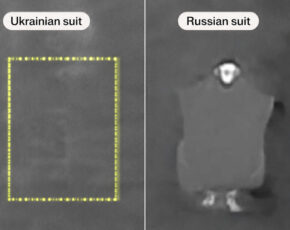
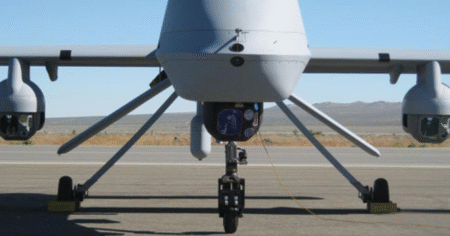
In modern UAVs, the infrared channel has become a fully integrated component of a round-the-clock detection system, used regardless of time of day, weather conditions, or lighting levels. The reason is that thermal contrast is often significantly more stable than visual contrast in many operational scenarios. Camouflage, terrain features, shadows, vegetation, or smoke may substantially complicate detection in the visible spectrum, yet the thermal emissions of personnel, vehicles, power sources, or recently active positions continue to generate a detectable infrared signature.
The thermal imaging channel is particularly effective for detecting concealed positions, FPV launch sites, vehicles after movement, shelters with insufficient thermal insulation, and personnel operating within vegetation or complex terrain. Even in the absence of direct visual contact, the system can often detect residual thermal anomalies, such as heated ground, equipment components, traces of human presence, or engine heat signatures.
Modern thermal image processing algorithms automatically enhance contrast, filter noise, highlight moving objects, and classify targets. In practice, operators are increasingly required to spend less time searching for targets manually, as the system itself identifies and flags suspicious objects.
Automated target recognition using UAVs
One of the key developments in modern UAV technology has been the integration of automated target detection and tracking systems based on artificial intelligence algorithms. Previously, a drone’s effectiveness depended directly on the operator’s training and ability to visually identify objects. Today, a significant portion of the analytical process is performed automatically.
Modern UAVs employ computer vision algorithms, convolutional neural networks (CNNs), and transformer-based models to analyze video streams in real time. The UAV can automatically identify distinctive target features, classify objects by type, determine target priority, and maintain tracking even under challenging observation conditions.
In practice, this means that the system no longer searches for a person in the traditional sense. Instead, algorithms analyze a combination of detectable indicators, including silhouette geometry, movement characteristics, thermal signatures, contrast against the background, behavioral patterns, and dynamic scene changes. Even partially concealed or camouflaged personnel can be identified through indirect indicators such as movement within vegetation, an unusual thermal profile, a characteristic temperature distribution, or behavior that differs from the surrounding environment.
Particularly dangerous are modern automatic target tracking systems, which maintain a target within the field of view after initial acquisition. The system independently predicts target movement, compensates for UAV maneuvering, and sustains stable tracking even when the line of sight is temporarily obstructed.
An additional threat comes from the transition to edge AI – data processing performed directly onboard the UAV. In this configuration, the drone can analyze the scene autonomously without continuously transmitting video to the operator. This reduces the load on communication channels, shortens reaction time, and increases the system’s resilience against electronic warfare measures or loss of communication with the operator.
Detection through signals and electronic activity
One of the fastest-growing areas in UAV detection systems is the use of RF sensors and signals intelligence capabilities (SIGINT/ELINT).
The principle of RF detection is based on searching for, intercepting, and analyzing electromagnetic emissions across specific frequency ranges. The system can detect UAV control signals, tactical radio communications, telemetry links, Wi-Fi connections, FPV video transmissions, relay stations, Starlink terminals, and other sources of radio-frequency activity. Even a brief transmission or the activation of transmitting equipment can be used to determine the approximate location of a position.
A modern UAV or ground-based system can simultaneously:
- detect a source of electromagnetic emissions;
- perform signal direction finding;
- correlate coordinates with thermal imaging or optical channels;
- automatically confirm the presence of a target.
A particularly important area of development is RF fingerprinting – the identification of a device type based on the unique characteristics of its signal. The system analyzes transmission parameters such as frequency instability, modulation structure, timing characteristics, spectral profile, and other technical features of the transmitter.
Swarm UAV systems as a new stage in aerial reconnaissance and strike capabilities
One of the most promising directions in modern UAV development is the shift toward swarm operations – the coordinated use of multiple unmanned platforms within a single network-centric control system. Unlike the classical model, where each drone operates as an individual unit under operator control, swarm architecture enables the coordination of a large number of UAVs functioning as a single distributed system for reconnaissance, detection, and engagement.
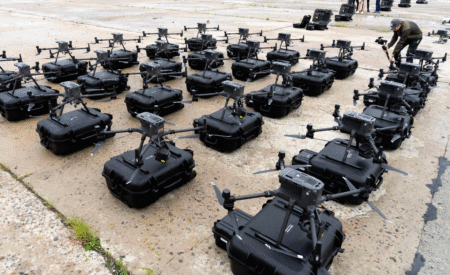
A key feature of swarm systems is continuous real-time data exchange between platforms. This effectively creates a multi-layered sensor fusion system in which information from different sensors and platforms is integrated into a unified digital picture of the battlefield.
In practical terms, this means that modern systems are no longer dependent on the capabilities of a single UAV. If one platform loses a target due to terrain, vegetation, or electronic warfare effects, other elements of the swarm continue tracking and transmit updated coordinates. This significantly increases the system’s resilience to losses, communication jamming, and the physical destruction of individual drones.
The future of the battlefield lies in automated detection and engagement systems
The development of UAVs and digital command-and-control systems is gradually transforming the very architecture of warfare. The key trend is the creation of a unified digital battlefield environment in which UAVs, electronic intelligence and electronic warfare systems (SIGINT/EW), artillery, ground sensors, command posts, and communication networks operate as an integrated information system. As a result, UAVs become an element of a multi-layered ISR (Intelligence, Surveillance, Reconnaissance) system capable of:
- automatically detecting targets;
- classifying objects;
- performing tracking;
- transmitting coordinates in real time;
- integrating with strike systems;
- adjusting engagement outcomes.
This effectively forms a closed sensor-to-shooter loop, where the time between target detection and weapon employment is continuously reduced. As a result, operators are increasingly less involved in direct target search and are instead shifting toward supervising automated systems.
A separate development direction is the integration of swarm systems and autonomous UAVs. In the future, groups of drones will be able to independently allocate surveillance sectors, exchange data to build a unified tactical picture, identify priority targets, and coordinate strikes without constant operator intervention. The main advantage of such systems lies not only in speed, but also in continuous multispectral monitoring.
For servicemembers, this represents a fundamental change in battlefield survival conditions. In such an environment, almost any activity becomes a detectable signature – thermal emissions, radio communication, acoustic traces, equipment concentration, or changes in terrain and vegetation. For this reason, modern force protection concepts are increasingly based not only on traditional camouflage, but on comprehensive signature management under conditions of persistent multichannel surveillance and automated battlefield analysis.