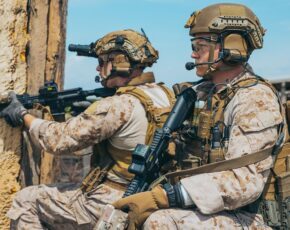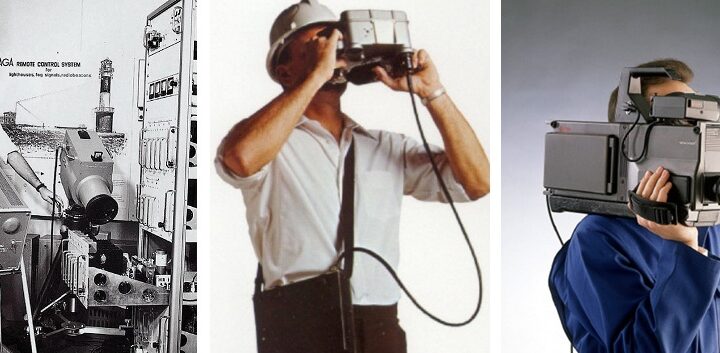
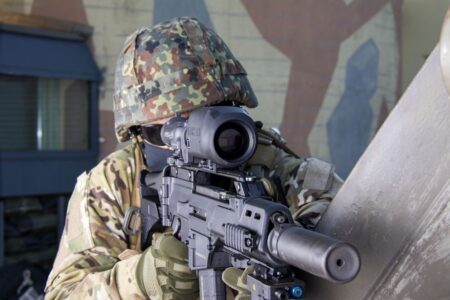
On the battlefield, control over information and the ability to see the enemy before they see you often determine the outcome of an operation. One of the key tools that provides this advantage is thermal imaging systems. Unlike optical surveillance devices, thermal imagers work effectively in complete darkness, through smoke, fog and, to some extent, through vegetation, making them indispensable for reconnaissance, combat duty and defence of positions.
Since the early 1990s, thermal imaging technology has evolved from bulky, energy-intensive devices to compact, high-performance systems integrated into sighting complexes, unmanned aerial vehicles, armoured vehicles and stationary security equipment. This evolution has not only expanded surveillance capabilities but has fundamentally transformed combat tactics, making the thermal domain one of the key dimensions of modern warfare.
Current trends in the development of thermal imaging technologies
The global market for military thermal imaging systems continues to grow due to the modernisation of armies and the increasing need for night vision and reconnaissance. According to analytical reports, the market for military thermal imaging cameras will grow by approximately 6-6.3% annually from 2025 to 2031 due to increased defence budgets and demand for modernised sensor platforms. This means that in the coming years, the number of advanced thermal imagers in the military arsenal will increase significantly not only among special forces, but also at the level of standard infantry, armored vehicles, and unmanned systems.
Trends indicate that thermal imaging technologies are rapidly evolving from standalone observation devices into intelligent, networked, and multifunctional systems that directly impact the effectiveness of modern armed forces.
One of the most significant changes is the integration of artificial intelligence and machine learning algorithms into thermal image processing. Automatic analysis algorithms are capable of independently detecting thermal anomalies, recognising human silhouettes, equipment or unmanned aerial vehicles, and tracking targets in real time. This significantly reduces the cognitive load on military personnel and shortens the time between threat detection and decision-making.
Alongside the development of artificial intelligence, the concept of fusion sensors is being actively implemented. Thermal imaging cameras are increasingly operating not in isolation, but in combination with optical cameras, radar systems, and other data sources. Combining information from different sensors makes it possible to compensate for the weaknesses of each individual technology.
An important technical breakthrough in recent years has been the widespread transition to uncooled microbolometer sensors. Whereas previously, highly sensitive thermal imagers required complex cooling systems, were heavy, expensive and demanding to maintain, modern sensors have greatly simplified operation. They consume less energy, weigh less, and are better suited for long-term operation in the field.
Particular attention should be given to the development of software-based image enhancement methods. Modern thermal imagers use complex algorithms for noise filtering, contrast enhancement, and adaptive image processing depending on the observation conditions. As a result, the operator receives a more informative image, enabling more confident target discrimination from the background, especially at long distances or under adverse weather conditions.
Alongside improvements in classic thermal imagers, there is growing interest in polarimetric thermal imaging systems, which are capable of analysing not only the intensity of thermal radiation, but also its polarisation characteristics. Such technologies provide additional capabilities for object and material recognition, which is particularly important in conditions of active camouflage and the use of special coatings.
Development of counter-thermal imaging solutions
Despite their rapid advancement, thermal imaging technologies are not a universal solution. The widespread proliferation of thermal vision systems gradually reduces their advantage. When both sides of a conflict have access to similar sensors, the decisive factor becomes not the device itself, but the level of training, tactics of employment, and the ability to counter surveillance.
Within the military domain, tactical camouflage measures are being explored that directly affect the performance of computer‑vision algorithms used in modern detection systems. In addition to physically masking the thermal signature, these methods aim to introduce subtle alterations to an object’s visual characteristics in order to mislead algorithms or complicate their operation at the image‑processing level. This approach may prove particularly important in environments where automated target recognition systems supported by machine learning are widely deployed.
Modern camouflage materials can reduce or even out thermal signatures, scatter infrared radiation, or mask people or equipment against the background of the surrounding environment. Combined with the right tactics, this significantly reduces the effectiveness of even modern thermal imaging systems.
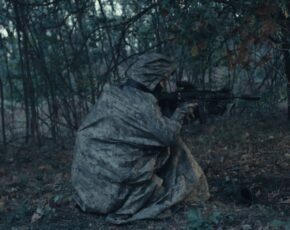
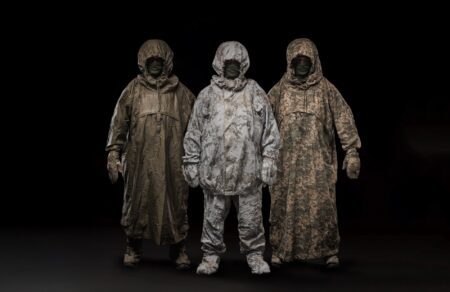
A prime example of this approach is the Stealth anti-thermal poncho and Stealth suit, designed as quick individual camouflage solutions in sensor-saturated battlefield conditions. These are ultra-lightweight camouflage solutions designed to reduce the visibility of military personnel to thermal imagers and night vision devices. Their effectiveness is based on the principle of multispectral camouflage: the material provides camouflage in the near (NIR), short-wave (SWIR), mid-wave (MWIR), and long-wave (LWIR) infrared spectra.
In addition, the widespread use of thermal imaging creates the illusion of complete battlefield transparency. Overreliance on thermal imaging can lead to mistakes, especially if the enemy deliberately uses false thermal targets, thermal traps, or changes activity modes to mislead operators.
Development forecast: what the thermal battlefield will look like in the coming years
In the coming years, thermal imaging technologies will continue to evolve from an auxiliary tactical tool to a full-fledged combat sensor platform, which will significantly influence the nature of modern warfare. The market for military thermal imaging systems is showing steady growth, not only due to increased defence budgets, but also due to the growing need for intelligent, networked sensor systems for reconnaissance and battlefield control.
Given the projected increase in the number of such systems in the infantry, armoured vehicles and unmanned complexes, the structure of the battlefield will change. Night operations will no longer be a specific or extreme task: they will become a standard condition for conducting combat operations with constant thermal monitoring of the situation. This, in turn, will increase the requirements for tactics and training – special attention must be paid not only to the use of thermal imagers, but also to tactics in an environment with high sensory visibility.
The development of countermeasures to thermal surveillance will also become an important area, as the increased availability and expanded range of applications for thermal imaging devices is stimulating the emergence of active and passive thermal camouflage technologies, adaptive materials and algorithms. Camouflage, aimed not only at the visible spectrum but also at the infrared component, will become an essential component of combat training and engineering equipment for positions.
The further spread of thermal imaging solutions to networked and autonomous platforms is also predicted, when thermal data will become available as part of a unified combat information system integrated with command centres, unmanned platforms and autonomous robots. This approach will increase situational awareness at the level of entire operational groups and allow for more effective planning and adjustment of actions in conditions of active countermeasures by the enemy.
As a result, the thermal battlefield of the future will be characterised by high sensitivity, adaptability and integration, where information about thermal signatures becomes as critical an element of awareness as data from radars or optical cameras. Success on the battlefield will increasingly depend not only on the availability of thermal imaging equipment, but also on the ability of personnel and commanders to effectively use, interpret and protect themselves in conditions of enemy sensory superiority.