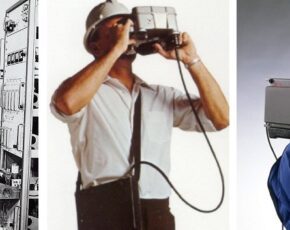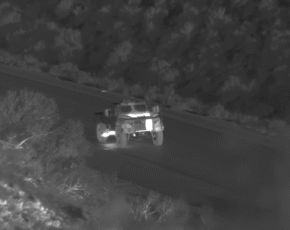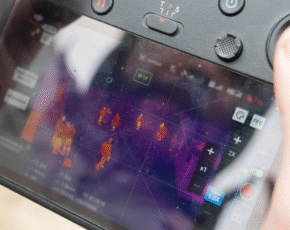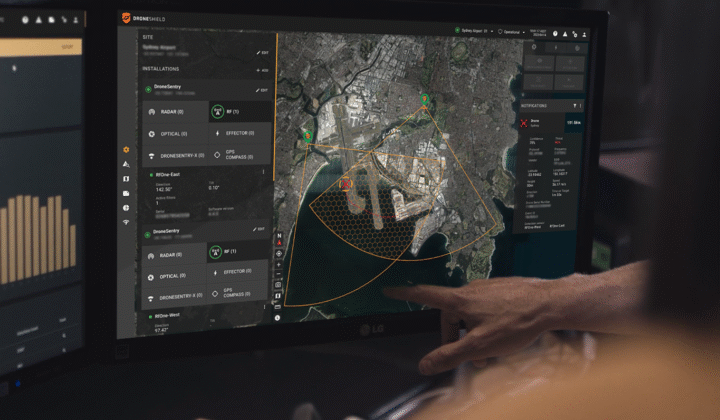
Just a few years ago, the primary threat to infantry came from UAV operators or reconnaissance crews physically spotting targets through optical devices or thermal imagers. Today, the situation is rapidly changing: AI-driven detection systems are entering the battlefield – computer vision algorithms and sensor fusion technologies capable of automatically identifying personnel, vehicles, positions, and anomalies faster than a human operator.
This is not about some future artificial intelligence concept. These systems are already operating in real combat conditions. Ukrainian and foreign developers are actively testing solutions that automatically analyze thousands of UAV images, detect concealed positions, and flag potential targets for engagement.
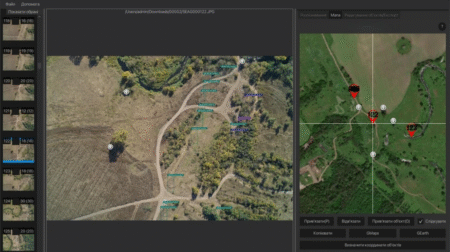
From observation to automated target identification
Conventional surveillance systems – thermal imagers, night vision optics, or UAV RGB cameras – are not the primary threat by themselves. The critical shift comes from the integration of computer vision systems and AI-assisted target detection operating through combined sensor suites.
In practice, modern reconnaissance is transitioning from a model where the operator searches for the target to one where the algorithm automatically detects, classifies, and tracks it. Analysis is performed continuously, at high speed, and simultaneously across multiple sectors.
Modern AI systems are already capable of:
- automatically identifying human silhouettes;
- detecting vehicles from partially visible elements;
- analyzing movement patterns;
- locating concealed positions through indirect indicators;
- classifying targets in real time;
- performing automatic target tracking after initial detection.
The key shift is that modern AI no longer operates on a simple “visible / not visible” principle. Instead, it relies on probabilistic target identification based on a combination of indirect indicators.
Camouflage can no longer be single-channel
Modern ISR (Intelligence, Surveillance and Reconnaissance) systems use a multidomain detection architecture – the simultaneous operation of multiple detection channels followed by AI-driven analysis of the collected data.
This involves the transition toward sensor fusion — an architecture in which optical, thermal, radar, radio-frequency, and other signals are no longer analyzed separately. Instead, the algorithm correlates them in real time, creating a unified picture of the environment and the behavior of objects within it. In this model, even a partially concealed object can be identified through a combination of indirect indicators that may appear weak individually across different channels, but become mutually reinforcing when analyzed together.
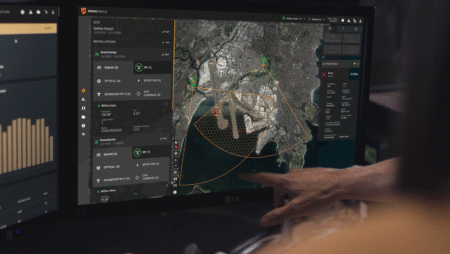
A typical architecture of a modern reconnaissance system may include:
- optical surveillance and video analysis;
- thermal imaging monitoring;
- radar surveillance;
- radio spectrum monitoring and signal source detection;
- acoustic signature analysis;
- navigational and inertial data from UAVs;
- accumulation of historical intelligence data for a given area.
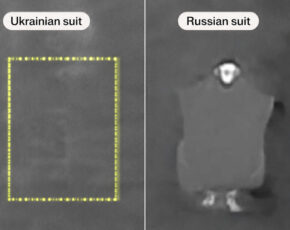
Even under conditions of visual invisibility, the system may use residual thermal signatures, terrain anomalies, changes in natural background, or recurring movement patterns to establish stable target tracking. In turn, radio-frequency and acoustic data can further confirm the presence of an object within the monitored zone. For this reason, advanced camouflage systems are increasingly focused not only on concealing a person from optical or thermal detection, but also on reducing the probability of object classification by algorithms.
AI significantly reduces the time between target detection and engagement
In the classical model of the combat cycle, a detected target would pass through several sequential stages: confirmation, transmission of coordinates, prioritization, decision-making, and deployment of a fire asset. In real combat conditions, this could take from several minutes to tens of minutes, depending on the type of target, the level of unit coordination, and the availability of fire assets.
Today, an increasing portion of this chain is being taken over by automated analysis systems. Algorithms are capable of independently recognizing potential targets in video streams or sensor data, assessing their priority, and transmitting coordinates directly to engagement systems. They can also track a target in real time and integrate with artillery fire control systems and FPV platforms. In some cases, the operator’s role is reduced to general oversight or confirmation of system actions.
The following become particularly vulnerable:
- static observation posts;
- UAV operators;
- crews during short stops;
- personnel concentration areas;
- logistics points;
- positions with repetitive activity patterns.
For units, this fundamentally changes behavioral requirements: the permissible time spent in open areas is reduced, the importance of rapid position changes increases, and any predictable activity within the surveillance zone can quickly be converted into strike coordinates.
FPV platforms and autonomous strike drones are becoming far more dangerous
As of today, most FPV systems still critically depend on the operator and the technical communication link. In a typical configuration, this requires stable radio control, continuous video transmission, manual target guidance, and uninterrupted visual control up to the moment of impact. For this reason, electronic warfare measures, loss of video signal, or brief target concealment often allow an attack to be disrupted. However, the integration of artificial intelligence object recognition algorithms is gradually changing this dependency, transforming FPV drones from fully operator-controlled strike systems into semi-autonomous or autonomous combat platforms.
Modern strike drones with AI components are already capable of:
- independently continuing navigation toward a target even after loss of control;
- maintaining target tracking without a stable video link;
- adapting flight trajectories under conditions of interference and absence of satellite navigation;
- recognizing objects by shape, contour, and movement patterns;
- re-establishing target tracking after a short-term loss of contact.
AI enables part of the operator’s functions to be transferred directly onboard the platform. In effect, FPV systems are shifting from a concept where the operator controls the drone to a principle where the operator defines the search sector, while the algorithm completes the engagement.
Concentration of personnel and equipment will become a critical factor in targeting
If previously the main focus was on individual objects or directly visible targets, modern algorithms are increasingly effective at detecting characteristic activity patterns and indicators of force concentration. For such systems, the most valuable target is not an individual servicemember, but any sign of organized unit activity.
Organized or prolonged activity creates a distinct and recognizable unit “profile” in a specific area. Attention is focused on movement density and patterns, logistics intensity, repeated routes, equipment accumulation points, rotation locations, engineering setup characteristics, thermal activity, radio communications, and the temporal cycles of unit operations.
For this reason, the modern battlefield increasingly forces units to change their operational approaches:
- dispersal of personnel and assets, abandoning dense formations;
- reducing the time spent at a single position or within one area;
- minimizing predictable routes and repetitive actions;
- fragmentation of logistics and avoidance of permanent accumulation points;
- constant changes in areas of activity and movement methods;
- control of thermal, visual, and radio-electronic signatures of presence.
The most vulnerable units will remain those operating according to fixed patterns, regularly using the same routes, holding positions for extended periods, or creating stable indicators of presence within a single area.
Limitations of AI detection and the rapid trend toward their elimination
Despite the rapid development of AI-based reconnaissance and ISR systems, modern algorithms still have a number of operational limitations. At the current stage, the primary vulnerabilities of AI detection are associated with:
- environmental complexity: dense urban areas, forested terrain, and landscapes with high levels of visual noise reduce classification accuracy;
- climatic factors: rain, snow, fog, and thermal inversion significantly affect the quality of optical and thermal channels;
- sensor data overload: the simultaneous presence of large numbers of moving objects complicates accurate target identification;
- false-positive detections: algorithms may incorrectly classify natural or man-made objects as targets;
- limitations of training models: effectiveness depends on the relevance of the data used to train the system;
- electronic signal degradation: electronic warfare and deliberate data distortion can reduce the quality of incoming information.
Methods that currently create significant difficulties for algorithms may lose effectiveness after model updates or changes in training parameters. AI models are rapidly improving through continuous training based on real combat data, integration of multispectral surveillance systems, expansion of combat scenario databases, and deployment of autonomous computing systems directly onboard UAVs and reconnaissance platforms.
AI algorithms as the new reality of warfare
The battlefield is gradually transitioning into a state of continuous automated monitoring, where any activity is treated as a potential signal for detection and subsequent engagement. The deployment of AI-based reconnaissance and strike systems is shaping a new model of warfare in which the key resource is no longer limited to firepower or protection, but also includes the level of a unit’s detectability within a multispectral surveillance environment.
Under these conditions, unit effectiveness will be determined by a combination of organizational and tactical measures: force dispersal, reduced exposure time in open areas, minimization of repetitive actions, and reduction of any stable indicators of presence. It is necessary to control thermal signatures, movement patterns, time spent in position, electromagnetic emissions, route repetition, and the behavioral patterns of the unit.