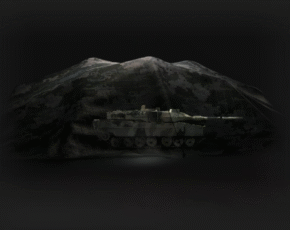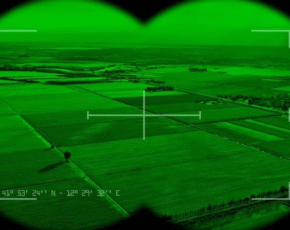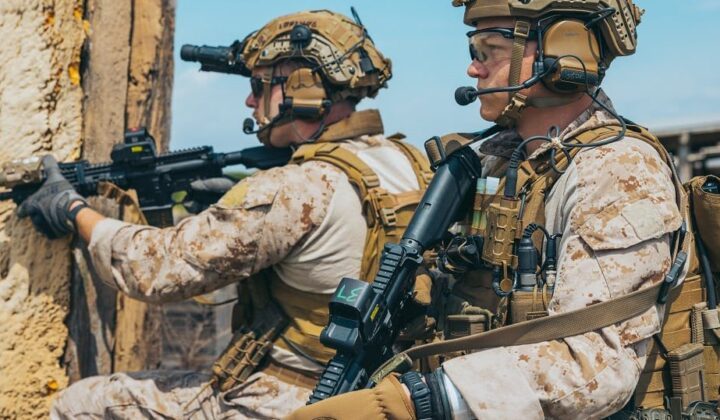
The U.S. Marine Corps has launched a procurement program for a new generation of personal camouflage systems – the Multispectral Camouflage Overgarment (MCO). The new system is intended to conceal personnel across multiple spectral bands simultaneously: the visible spectrum (VIS), near-infrared (NIR), short-wave infrared (SWIR), while also suppressing thermal emissions in the mid-wave infrared (MWIR) and long-wave infrared (LWIR) bands.
In practice, this is not simply another camouflage cloak, but a multispectral signature management system designed to reduce the probability of personnel detection by both optical surveillance systems and ground- and airborne thermal imaging sensors.
New camouflage requirements
The published technical requirements demonstrate that the U.S. military has already established specific performance criteria for its future multispectral camouflage system. The documentation defines detection threshold requirements based on the type of sensor, the distance to the sensor, and whether it is ground-based or mounted on an airborne platform.
For surveillance systems operating in the visible spectrum, the overgarment must conceal a service member from ground observers at a minimum distance of 600 meters, with an objective requirement of reducing the detection distance to 50 meters. For airborne platforms, including unmanned aerial systems, the minimum requirement is concealment at 1,000 meters, while the objective is to reduce the detection distance to 10 meters.
Equally demanding requirements have been established for mid-wave infrared (MWIR) thermal imaging systems. Against ground-based thermal imagers, the system must prevent detection at distances of at least 2,000 meters, with an objective threshold of 600 meters. For MWIR sensors mounted on unmanned aerial vehicles, the requirements are even more stringent: the camouflage system must provide effective concealment at a minimum distance of 5,000 meters, with a target threshold of 2,000 meters.
Particular attention has also been given to the system's operational characteristics. The MCO must consist of a single oversized overgarment capable of completely covering a service member together with standard equipment and combat gear. Its design must allow the garment to be donned or removed in less than 15 seconds, a capability considered critical during rapidly changing tactical situations.
In addition, the camouflage system must withstand intensive field use for 90 days to one year while retaining its protective performance after up to 50 laundering cycles. Weight limitations have also been specified: the system must weigh no more than 3.5 pounds (approximately 1.6 kg), with a desired weight of less than 2 pounds (approximately 0.9 kg). These requirements reflect the U.S. military's objective of combining a high level of multispectral protection with the mobility and comfort required by the individual service member.
From concept to fielded capability
The MCO program demonstrates that multispectral camouflage is no longer viewed by the U.S. military as specialized equipment reserved for selected units. Instead, the U.S. Marine Corps plans to integrate it into the standard equipment issued to personnel during operational deployments.
According to the published requirements, the Marine Corps plans to procure approximately 13,000 MCO systems by 2027 and more than 61,000 by 2030. These figures highlight both the scale of the program and its strategic importance for future military operations.
At the same time, the new system is not intended for routine wear at home stations or permanent duty locations. Rather, it is designed as mission-specific combat equipment to be deployed during operations in environments where the risk of detection by optical and infrared surveillance systems is high.

The United States already has practical experience with multispectral technologies
The development of the MCO is not the U.S. military's first step in the field of signature management. Over recent years, the U.S. Armed Forces have actively implemented multispectral technologies to conceal vehicles, field shelters, command posts, and logistics facilities.
The U.S. military already employs specialized camouflage systems capable of reducing the detectability of military equipment not only in the visible spectrum, but also in the near-infrared and thermal infrared bands. These solutions are used to conceal armored vehicles, artillery positions, radar systems, and other critical assets from airborne and space-based surveillance.
The same approach is now being extended to individual soldier equipment. This represents a logical evolution of the signature management concept, under which every element of military equipment is designed to minimize the probability of detection by modern sensor systems.
At the same time, the Ukrainian company STG Defence already offers a practical solution that aligns with the key requirements outlined in the MCO program. Its Stealth Thermal Signature Poncho has successfully completed comprehensive laboratory and field testing using modern thermal imaging systems. The poncho has been assigned a NATO Stock Number (NSN), is in use by the Ukrainian Armed Forces, and has been incorporated into the Technical Specifications of the Ministry of Defence of Ukraine as a reference sample. As a result, personal multispectral camouflage technologies have already progressed from concept to operational use, with Ukrainian developments effectively preceding several international programs that are still defining their technical requirements.
Ukraine's experience has changed the strategies of the world's armed forces
The MCO program documentation explicitly states that one of the factors driving the development of the new camouflage system was the experience gained during the Russo-Ukrainian War.
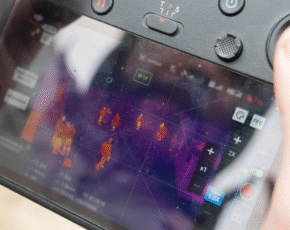
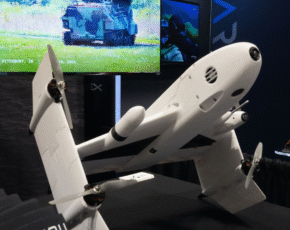
Combat operations in Ukraine have demonstrated that unmanned aerial vehicles equipped with thermal imaging cameras have become one of the primary means of detecting personnel during both day and night. Modern FPV drones, reconnaissance UAVs, and strike unmanned systems are increasingly employing thermal imaging technology, making concealed movement significantly more difficult for military personnel.
Under these conditions, traditional camouflage no longer provides an adequate level of protection. Even a perfectly matched camouflage pattern cannot conceal the human body's thermal radiation, which is readily detected by modern infrared sensors.
As a result, the U.S. military is placing increasing emphasis not only on the color of camouflage materials, but also on their spectral characteristics – the ability to control the reflection and emission of energy across multiple regions of the electromagnetic spectrum.
The future lies in comprehensive signature management
Global experience demonstrates that effective camouflage has long ceased to be solely a matter of color or garment design. It has become a complex engineering discipline that combines advanced materials science, the physics of thermal radiation, and a deep understanding of how optical and thermal imaging sensors operate.
For this reason, the world's leading armed forces are transitioning to comprehensive multispectral camouflage capable of simultaneously reducing detectability across the visible, near-infrared, and thermal infrared spectra.
For Ukraine, this transition is particularly significant, as the war has become a catalyst for the development of such technologies. Ukrainian manufacturers have gained unique experience in developing multispectral signature management systems that are validated not only in laboratory environments but also under real combat conditions. Today, this experience reflects a broader global trend: signature management technologies are becoming one of the key pillars of individual force protection, while multispectral camouflage is steadily evolving from an emerging capability into a standard component of modern military equipment.