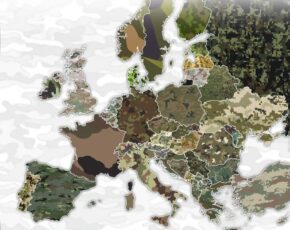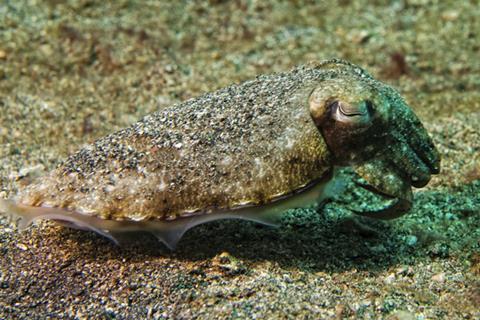
For millions of years, nature has been refining the technologies of concealment. For most living organisms, effective camouflage meant the difference between life and death: predators evolved increasingly sophisticated means of locating prey, while potential victims developed new mechanisms to avoid detection. As a result, extraordinarily complex concealment systems emerged, which today attract the attention not only of biologists, but also of military engineers, materials scientists, and developers of multispectral camouflage systems.
The modern battlefield increasingly resembles a natural ecosystem. Today, a servicemember must conceal themselves from a range of sensors: thermal imaging systems, night vision cameras, laser rangefinders, multispectral reconnaissance systems, automated target-recognition algorithms, and unmanned aerial vehicles. That is why the principles that nature has been developing for hundreds of millions of years are gaining new relevance today.
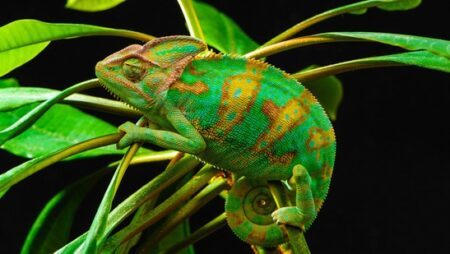
Biomimetics: what can modern camouflage learn from nature?
Biomimetics is a field of science that studies natural mechanisms and uses them as a basis for developing engineering solutions. The biomimetic approach is often mistakenly understood as an attempt to literally reproduce a natural object. For example, observing how a cuttlefish changes its coloration and creating a material that simply replicates its appearance. In reality, modern biomimetics operates at a much deeper level. Its purpose is to understand the physical principle that enables a natural system to achieve a desired result and then transfer that principle into a technical environment.
For military camouflage, this is particularly important. Nature does not create camouflage patterns in the way humans use them. Instead, living organisms control a whole range of parameters that determine how easily they can be detected.
Depending on the species, these parameters may include:
- color and brightness – how much the surface differs from the background;
- contrast – how light and dark areas are distributed;
- surface structure – whether the surface has a smooth, glossy, or matte texture;
- shape and silhouette – how easily the characteristic contours of an object can be recognized;
- spatial pattern – how spots, stripes, and color transitions disrupt the perception of the object's overall shape;
- reflective properties – what portion of radiation the surface absorbs, reflects, or scatters;
- dynamic behavior – the ability to change external characteristics depending on environmental conditions.
The last principle is particularly promising for military technologies. Most traditional camouflage materials are static: their color, structure, and optical properties remain virtually unchanged after manufacturing. Natural systems, by contrast, are capable of responding to changes in background, lighting, temperature, and the position of the object.
Therefore, the key question for an engineer is not “how can we make a material resemble the skin of a cuttlefish?” but rather “how does nature determine which surface properties need to change so that an object no longer stands out against its background?” This shift in approach is of fundamental importance.
Nature as a multispectral camouflage system
One of the most interesting features of natural camouflage is its multilayered nature. For example, an animal’s coloration can perform several functions simultaneously: matching the average color of the environment, disrupting the body’s outline, creating local contrasts, and influencing how the surface reflects light. In some organisms, the polarization of reflected light or the microrelief of the skin also changes.
For a military engineer, this offers an important lesson: a single surface characteristic cannot provide universal camouflage. When lighting, weather conditions, season, or terrain change, the background changes as well. Accordingly, effective concealment must be adapted to the environment.
Modern research into biomimetic materials is moving toward surfaces capable of controlling their optical and other physical properties. Researchers are studying mechanisms used by cephalopods, including the interaction of pigment cells, structural elements of the skin, and mechanisms for changing the surface relief. These studies are considered one of the possible pathways toward the development of artificial adaptive camouflage systems.
Breaking the silhouette is more important than a perfect color
The human brain and modern computer vision algorithms share a common characteristic: they primarily look for familiar contours. This is why many animals use so-called disruptive camouflage. It does not attempt to make an object invisible. Its purpose is to break up a recognizable silhouette. Dark and light areas are arranged in such a way as to conceal the actual boundaries of the body. The observer sees individual patches but is unable to quickly determine the shape of the object.
For the modern battlefield, this principle is becoming even more important. Automated drone recognition algorithms work specifically with the contours of equipment or personnel. When the silhouette is disrupted, neural networks are more likely to make errors or take longer to detect the target. Therefore, modern concealment solutions are increasingly focused not only on color but also on disrupting the geometric characteristics of the target.

From natural mechanisms to military technologies
If the first half of the biomimetic approach answers the question of what exactly can be learned from nature, the next question is considerably more difficult: which of these principles can realistically be transferred into military technology?
The answer does not lie in creating an “invisibility suit” that literally copies the skin of a cuttlefish. A more practical approach is to break the natural system down into individual functions and reproduce them using modern materials.
In nature, camouflage is essentially a signature management system. An organism does not simply have a particular color – it interacts with its environment in a way that reduces its visual distinction from the background. For military equipment, this principle can be formulated even more broadly: the difference between an object and its surroundings must be reduced across the spectral ranges in which the adversary operates. This is precisely where biomimetics intersects with the concept of multispectral camouflage.
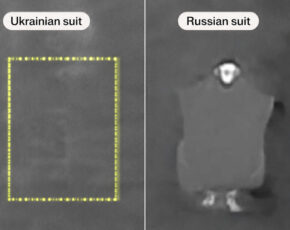
A practical example of this approach is the Thermal Signature Poncho by STG Defence. Its purpose is not simply to physically block the heat emitted by the body, but to reduce the contrast between a servicemember’s thermal signature and the surrounding environment. The silver-coated nylon-based material combines high reflectivity with low emissivity. The poncho is designed to operate across the NIR, SWIR, MWIR, and LWIR ranges, meaning that its concept goes beyond traditional visual camouflage. For those looking for where to buy an anti-thermal imaging poncho for military use, the Stealth Poncho is a ready-to-use solution that employs thermal signature management.
The next level: adaptive signature management
Biomimetics does not provide a ready-made formula for invisibility, but it changes the very approach to developing camouflage. Nature shows that effective concealment is not a single property or an individual camouflage pattern. It is a combination of control over color, contrast, shape, texture, reflection, and the ability to adapt to the surrounding environment.
For military camouflage, the transition from copying appearance to copying functional principles is particularly important. Engineers can use individual mechanisms that nature has refined over millions of years and combine them with modern polymers, optical, electronic, and nanomaterials. This is how materials emerge that can maintain a specific color while controlling their interaction with radiation across different spectral ranges.
At the same time, a significant gap remains between a laboratory biomimetic material and a practical military system. Field application requires not only the necessary optical characteristics but also low weight, mechanical strength, and resistance to moisture, dust, abrasion, and repeated use.
Adaptive systems face even more complex requirements – response speed, control, energy consumption, and stable performance under different weather conditions. The visible range, near-infrared spectrum, thermal radiation, and other observation channels require different physical mechanisms and must be integrated into a single system. The goal is not to become invisible – it is to become less distinguishable from the environment to every sensor capable of detecting you.