Decisions by the U.S. military to pursue new generations of camouflage systems provide further confirmation of a global trend: traditional camouflage no longer provides an adequate level of protection on the modern battlefield.
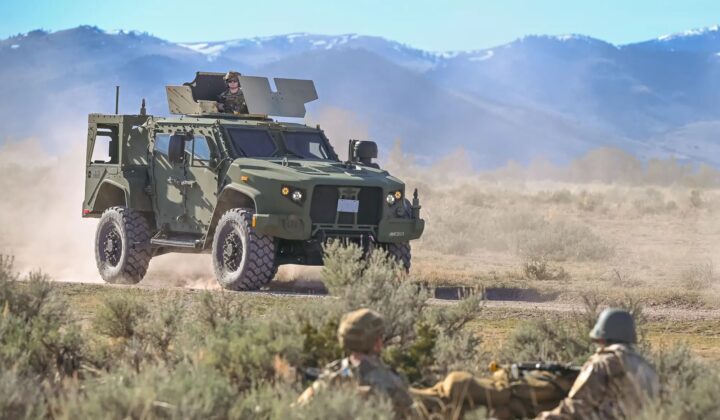
For this reason, the U.S. Air Force has initiated the search for a new generation of lightweight camouflage nets capable of concealing military equipment and personnel from thermal imaging systems operating in the mid-wave infrared (MWIR) and long-wave infrared (LWIR) bands. According to the published requirements, the new nets must conceal the thermal emissions of both operating military equipment and personnel while simultaneously providing visual concealment through reversible camouflage patterns.
In practice, this is not simply another upgrade of field equipment, but an adaptation to the new architecture of modern reconnaissance, where unmanned systems, thermal imaging cameras, automated target detection algorithms, and integrated reconnaissance-strike systems play the central role.

Multispectral camouflage is becoming the new standard
Notably, the U.S. requirements explicitly call for the use of nanotechnology or advanced composite materials. This reflects a fundamental shift in the approach to the development of camouflage systems.
A modern multispectral camouflage net is no longer simply a piece of fabric with a camouflage pattern. It is a sophisticated engineered system designed to control the interaction between its surface and electromagnetic radiation across multiple spectral bands. Such materials are capable of modifying an object's thermal emission, reducing its contrast with the surrounding environment, and making detection by thermal imaging sensors more difficult.
For military personnel, this translates into additional time before detection, a reduced probability of automatic target acquisition, and enhanced overall survivability of both personnel and equipment.
It is particularly important that a similar direction of development is now actively emerging in Ukraine. Real combat experience has driven the creation of indigenous multispectral camouflage technologies developed not under laboratory conditions, but on the basis of practical experience in countering modern reconnaissance systems. One example is the solutions developed by STG Defence – proprietary technologies that combine effective visual camouflage with reduced detectability in the infrared spectrum.
Protection must cover several spectral bands simultaneously
The U.S. Air Force's requirements for camouflage in the mid-wave infrared (MWIR) and long-wave infrared (LWIR) bands demonstrate that the modern approach is based on comprehensive signature reduction.
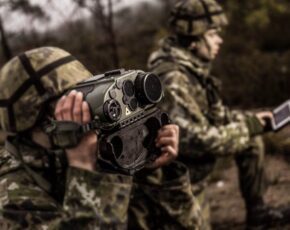
MWIR sensors are particularly effective at detecting hot objects, including running engines, exhaust systems, heated vehicle components, and other sources of intense thermal radiation. In contrast, LWIR cameras effectively detect the natural thermal emission of objects even in the absence of active heating, enabling the detection of personnel, vehicles after they have stopped, and concealed positions.
This is why modern multispectral materials must operate effectively across multiple spectral bands simultaneously rather than addressing only a single detection challenge. Whereas drone operators once relied primarily on visual cues to locate targets, thermal imaging cameras, automatic target recognition algorithms, and machine vision systems now play an increasingly important role.
For these systems, the quality of visual camouflage alone is not the determining factor. Instead, they analyze other parameters, including thermal contrast, the shape of the thermal signature, the distribution of surface temperatures, and the dynamics of heating and cooling. Even partially concealed vehicles can be detected through localized hotspots generated by the engine, transmission, exhaust system, or other powertrain components.
How militaries around the world are advancing multispectral camouflage technologies
The development of surveillance systems has driven the world's leading militaries to move beyond conventional camouflage toward comprehensive multispectral camouflage systems. Today, this approach is increasingly regarded as the standard for enhancing battlefield survivability.
One key area of development focuses on personal camouflage solutions. The U.S. Marine Corps is currently developing a multispectral camouflage poncho designed to reduce a soldier's detectability in the visible, near-infrared (NIR), and short-wave infrared (SWIR) bands, while also suppressing the thermal signature in the mid-wave infrared (MWIR) and long-wave infrared (LWIR) ranges. This is a direct response to the widespread deployment of thermal imaging systems on unmanned platforms.
Alongside practical developments, extensive research is being conducted in the fields of metamaterials and controlled thermal emission. Scientific studies demonstrate the potential to create materials capable of dynamically modifying their infrared emission and adapting an object's thermal profile to the surrounding environment in real time. These technologies are considered the foundation of future active camouflage systems.
Taken together, these developments are shaping a new doctrine of battlefield survivability: concealing an object is no longer simply a matter of disguising its shape—it requires comprehensive control of its electromagnetic and thermal signature across multiple spectral bands simultaneously.
Ukraine as a context for the development of modern camouflage standards
This challenge has become particularly acute following the widespread use of unmanned systems in the Russo-Ukrainian War. Large numbers of FPV drones, reconnaissance UAVs, and loitering munitions are equipped with thermal imaging cameras capable of effectively detecting vehicles, positions, and personnel even when they are fully concealed from visual observation.
Significantly, the requirements currently being developed by the U.S. military closely align with the challenges Ukrainian units face on a daily basis. This once again confirms that multispectral camouflage is no longer a niche capability but is gradually becoming one of the fundamental elements of force protection.
In the coming years, the ability to conceal personnel and equipment not only from the human eye but also from thermal imagers, automated detection systems, and artificial intelligence algorithms will increasingly determine the effectiveness of battlefield camouflage. Under these conditions, the development of indigenous Ukrainian technologies is becoming not only a tactical advantage but also a strategic asset for the country's defence capability.